On This Page
Where a Claim Actually Starts
An e-bike claim does not begin where a car claim begins. There is no policy attached to the machine: Fla. Stat. § 316.20655(2) exempts an electric bicycle and its operator from the laws on financial responsibility, licensing, registration, and title certificates. And no personal injury protection can be written on it, because Fla. Stat. § 627.732(3) defines a PIP “motor vehicle” as having four or more wheels.
So the first work in these cases is identifying whose coverage can be reached and preserving the evidence that will decide it — and both of those are time-limited. This section covers the process. The Florida laws section covers the statutes themselves.
The Guides in This Section
What to Do After an E-Bike Crash
The first hours, the crash report, and the evidence that disappears fastest.
Who Is Liable
Drivers, owners, employers, manufacturers, retailers, and road authorities — and how § 768.81 apportions fault among them.
Insurance After an E-Bike Crash
No policy covers the bicycle. Which coverages can actually pay, in the order worth checking.
Product Liability
Battery, brake, fork, and frame failures, and the CPSC requirements Fla. Stat. § 316.20655(5) incorporates.
Evidence That Proves the Case
The bicycle, the label, the scene, the records, and the public records requests that establish notice.
Dealing With Adjusters
Recorded statements, coverage positions, and the civil remedy notice under § 624.155(3)(a).
The Settlement Process
How a claim moves from notice to resolution, and what each stage actually requires.
Hiring a Lawyer
Contingency fees, written fee agreements, and what to ask before signing one.
E-Bike Accident FAQ
The questions riders ask most, answered with the subsection each answer comes from.
Every guide in this section is now written. Deadlines are covered in the law section rather than duplicated here — see the statute of limitations guide.
What the First Hours Determine
More of an e-bike case is decided in the first day than most riders expect, because the evidence sits on the rider’s side and degrades quickly.
- Medical care, promptly. A gap between the crash and the first medical record is the most common argument an insurer makes against causation.
- A crash report. Confidential for 60 days under Fla. Stat. § 316.066(2)(a), but available to you as a party in that window under § 316.066(2)(b).
- The bicycle, preserved as it is. Repairing or discarding it usually ends any product claim. That includes a burned or swollen battery.
- The classification label. Fla. Stat. § 316.20655(3) requires a permanent label showing classification number, top assisted speed, and motor wattage. What the machine was becomes contested later.
- Photographs of the scene and the road surface, before anything is moved or repaired.
- Witnesses. Independent witnesses are rarely recoverable after the day of the crash.
What to do after a crash sets this out step by step.
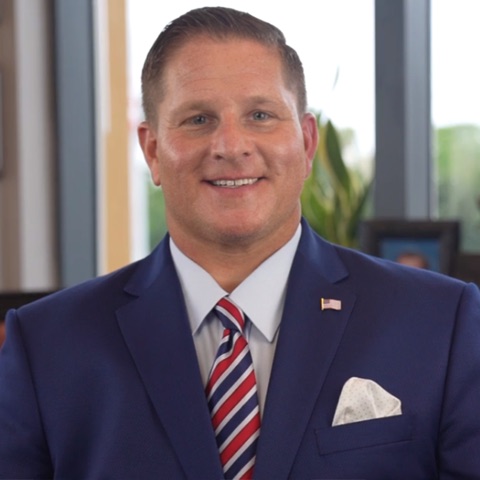
David I. Shiner, Esq.
Founder, Shiner Law Group · AV Preeminent® rated · Florida Bar member since 2002
David I. Shiner founded Shiner Law Group and has been a member of The Florida Bar since 2002. He is a graduate of Nova Southeastern University’s law school and holds an AV Preeminent® rating from Martindale-Hubbell. The firm represents injured people across Florida from offices in Boca Raton, West Palm Beach, Fort Lauderdale, Fort Pierce, Orlando, Wellington, and Belle Glade, and handles these cases on a contingency basis with free consultations and no attorney’s fee unless there is a recovery.
Who Ends Up Responsible
Rarely just the driver. Fla. Stat. § 768.81(1) defines a “negligence action” to include claims based on negligence, strict liability, products liability, professional malpractice, and breach of warranty, so a single action can carry a driver, a manufacturer, a retailer, and a road authority with fault apportioned among them.
| Party | Basis |
|---|---|
| The driver | Ordinary negligence. Fla. Stat. § 316.2065(1) gives the rider the rights and duties of any other vehicle’s driver, imported to e-bikes by § 316.20655(1). |
| The vehicle’s owner | Florida’s dangerous instrumentality doctrine, a common law rule rather than a statute. |
| Manufacturer, distributor, retailer | Product claims. Fla. Stat. § 316.20655(5) requires compliance with 16 C.F.R. part 1512. |
| A government body | Pavement and design claims, capped at $200,000 per person and $300,000 per incident by Fla. Stat. § 768.28(5). |
Product liability is a primary theory in this practice area rather than a secondary one, because the failure modes are mechanical and electrical: thermal runaway, brake fade, a fork or frame cracking at a weld. See who is liable.
Injured on an E-Bike in Florida?
Shiner Law Group offers free case reviews for Florida e-bike riders — 24/7, no fee unless you win.
Get My Free Case ReviewShiner Law Group, P.A. · Attorney Advertising
Your Own Share of the Fault
Under Fla. Stat. § 768.81(2) contributory fault reduces an award proportionately, and under § 768.81(6) a party “found to be greater than 50 percent at fault for his or her own harm may not recover any damages.” A defense does not need to show the rider caused the crash — only to move the apportionment past halfway.
One line of attack has no legs. Fla. Stat. § 316.2065(18) provides that failure to wear a bicycle helmet “may not be considered evidence of negligence or contributory negligence,” and it reaches e-bike riders through § 316.20655(1). Compare the seat belt rule at § 316.614(10), which does allow non-use as evidence of comparative negligence — and which excludes electric bicycles at § 316.614(3)(a) anyway.
Others are real questions of fact: lane position under § 316.2065(5)(a) turns on what was “practicable”; lighting under § 316.2065(7) requires a white front lamp visible at 500 feet and a rear lamp and reflector visible at 600 feet between sunset and sunrise.
Which Insurance Can Actually Pay
In rough order of how often they matter: the at-fault driver’s bodily injury liability coverage; uninsured and underinsured motorist coverage under Fla. Stat. § 627.727; a product claim; health insurance; a capped claim against a government body under § 768.28; and, contested, personal injury protection under a household auto policy.
UM deserves particular attention because riders routinely assume they do not have it. Under § 627.727(1) the coverage must be included on a Florida policy unless a named insured rejected it in writing on a form whose heading appears in 12-point bold type. Ask for the declarations page and any signed rejection before accepting that there is none.
On PIP, this site does not give you a clean answer, because Florida law does not have one. § 627.736(4)(e) pays benefits to a person injured “while not an occupant of a self-propelled vehicle,” and chapter 627 never defines that phrase. The Florida Supreme Court held in Velez v. Criterion Insurance Co., 461 So. 2d 1348 (Fla. 1984), that a moped was not a self-propelled vehicle. Whether that reaches a modern statutory e-bike, and whether Class 2 differs from Classes 1 and 3, has not been decided so far as we have found. The full analysis is here.