The Five Questions Riders Ask Most
How long do I have to file an e-bike accident claim in Florida?
Does my PIP cover me if I was hurt on an e-bike?
Can I still recover if the crash was partly my fault?
Can not wearing a helmet be used against me?
What does it cost to hire an e-bike accident lawyer in Florida?
Florida E-Bike Law
Is an e-bike a motor vehicle in Florida?
Not under the traffic code. Fla. Stat. § 316.003(46) defines “motor vehicle” to exclude “any bicycle, electric bicycle, motorized scooter… or moped,” and Fla. Stat. § 316.20655(1) provides that an electric bicycle “is a vehicle to the same extent as a bicycle.” Chapter 627, which governs insurance, defines its own terms separately — which is where the PIP question comes from.
What counts as an electric bicycle?
Fla. Stat. § 316.003(23) requires fully operable pedals, a seat or saddle, and an electric motor of less than 750 watts meeting one of three classes: Class 1 assists only while pedaling to 20 mph, Class 2 may propel the bicycle by motor alone to 20 mph, and Class 3 assists only while pedaling to 28 mph. See classification.
Do I need a license, registration, or insurance?
No. Fla. Stat. § 316.20655(2) provides that an electric bicycle and its operator are not subject to the laws relating to financial responsibility, driver or motor vehicle licenses, vehicle registration, or title certificates. That also means no coverage attaches to the machine.
Is there a minimum age?
Not statewide in the statute. Since ch. 2025-149, Laws of Florida, Fla. Stat. § 316.20655(8) allows a local government to adopt minimum age requirements and to require an operator to carry government-issued photo identification. Check the ordinance where you ride.
Did Florida pass a new e-bike law in 2026?
No. CS/SB 382 (2026) passed the Senate 37-0 and the House 112-0 but was vetoed by the Governor on June 25, 2026 and never became law. Guides describing its provisions as effective from July 1, 2026 are wrong. The controlling text remains Fla. Stat. § 316.20655 as amended by ch. 2025-149.
Can I ride on the sidewalk?
As a matter of state law, generally yes. Fla. Stat. § 316.1995(1) bars driving a vehicle “other than by human power” on a sidewalk but opens with an express exception for s. 316.20655. Local governments may restrict it under § 316.20655(1), so the municipal code is the controlling text where you are.
After a Crash
How much room must a driver give me when passing?
At least 3 feet. Fla. Stat. § 316.083(2) and (3) require a driver overtaking a bicycle, other nonmotorized vehicle, or electric bicycle to pass “at a safe distance of not less than 3 feet.” The statute names electric bicycles expressly.
A driver passed me and turned right into me. Was that legal?
Only in defined circumstances. Fla. Stat. § 316.151(1)(a)2. permits a driver overtaking a bicycle to make the right turn “only if the bicycle is at least 20 feet from the intersection, and is of such a distance that the driver of a vehicle may safely turn,” after signaling. See right-hook collisions.
Who had the right of way if a driver turned left across me?
You did, if you were approaching from the opposite direction. Fla. Stat. § 316.122 requires a driver turning left within an intersection or into an alley, private road, or driveway to yield to any vehicle approaching from the opposite direction which is within the intersection or so close as to constitute an immediate hazard.
Can I get the crash report?
Yes, as a party. Fla. Stat. § 316.066(2)(a) makes crash reports confidential for 60 days, and § 316.066(2)(b) makes them available in that window to the parties, their legal representatives, their insurers, and law enforcement.
Will the crash report decide fault?
No. Fla. Stat. § 316.066(4) provides that such a report or a statement made for it “may not be used as evidence in any trial, civil or criminal.”
Why does everyone say not to repair the bike?
Because if a component failed, the machine is the claim rather than evidence of it. An engineer can establish from the actual part whether it failed by defect, fatigue, misassembly, or abuse. Once repaired or discarded, that examination is impossible.
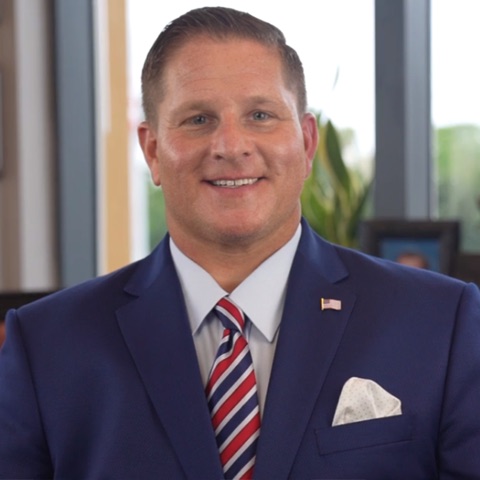
David I. Shiner, Esq.
Founder, Shiner Law Group · AV Preeminent® rated · Florida Bar member since 2002
David I. Shiner founded Shiner Law Group and has been a member of The Florida Bar since 2002. He is a graduate of Nova Southeastern University’s law school and holds an AV Preeminent® rating from Martindale-Hubbell. The firm represents injured people across Florida from offices in Boca Raton, West Palm Beach, Fort Lauderdale, Fort Pierce, Orlando, Wellington, and Belle Glade, and handles these cases on a contingency basis with free consultations and no attorney’s fee unless there is a recovery.
Insurance and Who Pays
No policy covers my e-bike. So who pays?
In rough order: the at-fault driver’s bodily injury liability coverage; uninsured or underinsured motorist coverage under Fla. Stat. § 627.727; a product claim if a component failed; health insurance; and a capped claim against a government body under § 768.28. PIP is contested. See insurance after a crash.
I was told I have no uninsured motorist coverage. Should I accept that?
Check first. Fla. Stat. § 627.727(1) requires UM coverage on a Florida policy unless a named insured rejected it in writing, on a form whose heading appears in 12-point bold type. Ask for the declarations page and any signed rejection form.
The driver had minimum limits and my injuries are worse than that.
That is what underinsured motorist coverage addresses. Fla. Stat. § 627.727(3) describes when a vehicle counts as uninsured, including where the available limits are insufficient.
How much can I recover from a city or county?
Fla. Stat. § 768.28(5) limits liability to $200,000 per person and $300,000 per incident. Anything above that is payable only if the Legislature passes a claim bill.
What if the insurer simply will not deal fairly?
Fla. Stat. § 624.155(1)(b) identifies bad faith conduct including not attempting in good faith to settle when it could and should have done so. Under § 624.155(3)(a) the department and the insurer must first be given 60 days’ written notice.
Still Not Sure Where You Stand?
Shiner Law Group offers free case reviews for Florida e-bike riders — 24/7, no fee unless you win.
Get My Free Case ReviewShiner Law Group, P.A. · Attorney Advertising
Deadlines and Process
What if a government body is responsible for the road?
A different track applies. Fla. Stat. § 768.28(6)(a) requires written presentment within 3 years, § 768.28(6)(b) makes it a condition precedent, and § 768.28(14) requires suit within 4 years. See government claims.
I read that Florida gives four years to sue. Which is right?
Two, for negligence causes of action accruing on or after March 24, 2023. Section 3 of ch. 2023-15, Laws of Florida, moved negligence from the four-year subsection to § 95.11(5)(a). Section 95.11(3)(a) today concerns the determination of paternity, so any source citing it for a crash deadline has not been updated.
How long will my claim take?
There is no reliable general answer, and a source offering one without knowing your facts is guessing. What is fixed are the deadlines above. See the settlement process.
What is my claim worth?
This site does not publish case values, settlement figures, or averages, and it will not estimate yours. It depends on the injuries, the treatment, the fault apportionment under Fla. Stat. § 768.81, and the coverage that actually exists. A lawyer can assess your facts; a web page cannot.
Should I settle before finishing treatment?
Settling is final. Until the medical picture is reasonably clear, nobody knows what is being released — which is why early offers tend to arrive early.