On This Page
When a Public Body Ends Up in an E-Bike Case
A large share of e-bike crashes involve no second vehicle at all. A rider goes down on a longitudinal crack that catches a narrow tyre, on a sunken utility cover, on a bike lane that ends without warning, or on a trail surface that has not been maintained. In those cases the potential defendant is the body responsible for the road or the path.
Florida is a sovereign immunity state, which means a government body cannot be sued at all except to the extent the Legislature has permitted it. Fla. Stat. § 768.28 is that permission, and it comes with conditions that have no equivalent in an ordinary claim against a driver. Every one of them can end a claim on its own.
There is a further threshold that the statute does not spell out but Florida law imposes: the distinction between discretionary planning-level decisions, which remain immune, and operational-level ones, which do not. Whether a particular failure falls on one side or the other is genuinely contested in most cases and is not something to assess from a web page.
The Recovery Caps, and What Sits Above Them
Fla. Stat. § 768.28(5) limits what a government body pays. Liability may not exceed $200,000 on any one claim or judgment, or $300,000 when totalled with all other claims and judgments arising out of the same incident.
These are hard figures, and for a serious injury they are frequently well below the loss. A judgment may be entered above the cap, but the excess is not payable unless the Legislature passes a claim bill authorizing it — a separate legislative process, on no fixed timetable, with no assurance of an outcome.
That reality shapes strategy rather than ending it. Where a public body is one of several potentially responsible parties — alongside a driver, or a manufacturer whose component failed — the apportionment rules in Fla. Stat. § 768.81 and the presence of uninsured motorist coverage often matter more to the outcome than the capped defendant does.
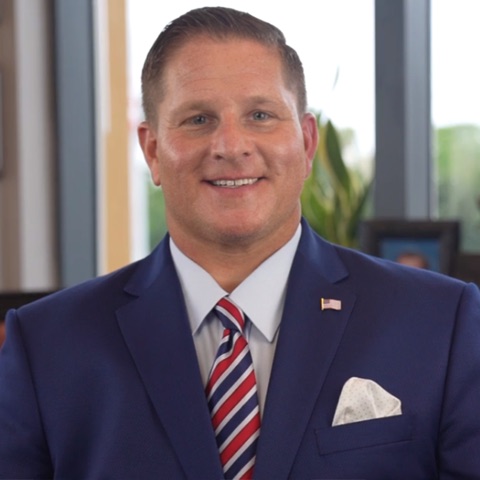
David I. Shiner, Esq.
Founder, Shiner Law Group · AV Preeminent® rated · Florida Bar member since 2002
David I. Shiner founded Shiner Law Group and has been a member of The Florida Bar since 2002. He is a graduate of Nova Southeastern University’s law school and holds an AV Preeminent® rating from Martindale-Hubbell. The firm represents injured people across Florida from offices in Boca Raton, West Palm Beach, Fort Lauderdale, Fort Pierce, Orlando, Wellington, and Belle Glade, and handles these cases on a contingency basis with free consultations and no attorney’s fee unless there is a recovery.
What Section 768.28 Requires You to Do First
- Present the claim in writing, within 3 years. Fla. Stat. § 768.28(6)(a) requires written presentment to the appropriate agency within 3 years after the claim accrues and, except as to a claim against a municipality, county, or the Florida Space Authority, also to the Department of Financial Services.
- Identify the right agency. Roads in a single corridor may be city, county, or state responsibility, and the correct recipient of the notice follows the body that controls the roadway, not the address of the crash.
- Include the information the statute requires. Fla. Stat. § 768.28(6)(c) requires the claimant to provide identifying details and a statement of any adjudicated penalties or judgments owed to the state, and § 768.28(6)(d) requires that compliance be complete before settlement payment, the close of discovery, or the commencement of trial, whichever comes first.
- Let the investigation period run. The agency is given a period to investigate and deny the claim before suit may be filed. Under § 768.28(6)(b) both the notice and the denial are conditions precedent to maintaining the action.
- File suit within 4 years. Fla. Stat. § 768.28(14) bars the claim unless the civil action is commenced within 4 years after it accrues.
Note what § 768.28(6)(b) says about accrual: the notice and denial requirements “shall not be deemed to be elements of the cause of action and shall not affect the date on which the cause of action accrues.” Waiting on an agency does not extend anything. The clock at § 95.11 and the clock at § 768.28(14) run regardless of how long the agency takes.
Did the Road Itself Cause Your Crash?
Shiner Law Group offers free case reviews for Florida e-bike riders — 24/7, no fee unless you win.
Get My Free Case ReviewShiner Law Group, P.A. · Attorney Advertising
Why the Evidence Window Closes Faster Here
A pavement defect claim depends on proving the condition existed, that the responsible body knew or should have known about it, and that it caused the fall. Every one of those elements degrades with time in a way that a collision claim does not.
- The defect gets repaired. Once a crack is filled or a cover reseated, the condition that caused the crash no longer exists. Photographs taken the same day, with something in frame for scale, are often the only record of it.
- Notice has to be built from records. Prior complaints, work orders, inspection logs, and resurfacing schedules are what establish that a body knew. Those are obtained through public records requests, and the sooner they are made the better.
- The bicycle is evidence too. Wheel and fork damage corroborate the mechanism of the fall. Preserve the machine rather than repairing it.
- Jurisdiction takes time to establish. Determining which body controls a given stretch of roadway or trail can itself take weeks, and the 3-year presentment period under § 768.28(6)(a) is running while it happens.
None of this changes the outcome of a claim by itself. It changes whether there is a claim capable of being assessed at all, which is why the first days after a fall on a public road matter disproportionately.