On This Page
Why This Coverage Carries So Much Weight for Riders
An e-bike case does not start where a car case starts. Fla. Stat. § 316.20655(2) provides that an electric bicycle and its operator are “not subject to the provisions of law relating to financial responsibility, driver or motor vehicle licenses, vehicle registration, title certificates…” No insurance is required on the machine, and none attaches to it.
Nor can an e-bike carry personal injury protection. Fla. Stat. § 627.732(3) defines a PIP “motor vehicle” as “any self-propelled vehicle with four or more wheels which is of a type both designed and required to be licensed for use on the highways of this state.” A two-wheeled electric bicycle cannot satisfy that definition, so PIP is never written on it.
What is left is the at-fault driver’s bodily injury liability coverage, any product claim against a manufacturer or retailer, and — when the driver has too little insurance or none, or cannot be found at all — uninsured and underinsured motorist coverage under Fla. Stat. § 627.727. For a great many injured riders that last one is not a backstop. It is the main event.
What Section 627.727 Requires of Insurers
Fla. Stat. § 627.727(1) provides that no motor vehicle liability policy providing bodily injury coverage may be delivered or issued in Florida for a vehicle registered or principally garaged here “unless uninsured motor vehicle coverage is provided therein or supplemental thereto.” The coverage is the default. It comes off the policy only by a deliberate act.
That act is a written rejection. The same subsection provides that the coverage “is not applicable when, or to the extent that, an insured named in the policy makes a written rejection of the coverage on behalf of all insureds under the policy.” And the statute prescribes the form: the heading must appear in 12-point bold type and must state, “You are electing not to purchase certain valuable coverage which protects you and your family or you are purchasing uninsured motorist limits less than your bodily liability limits when you sign this form. Please read carefully.”
Those formalities are not decoration. Where a rejection does not comply, the question of whether coverage exists on the policy is a live one rather than a settled one. The first documents to obtain after a serious crash are the declarations page and any rejection form on file.
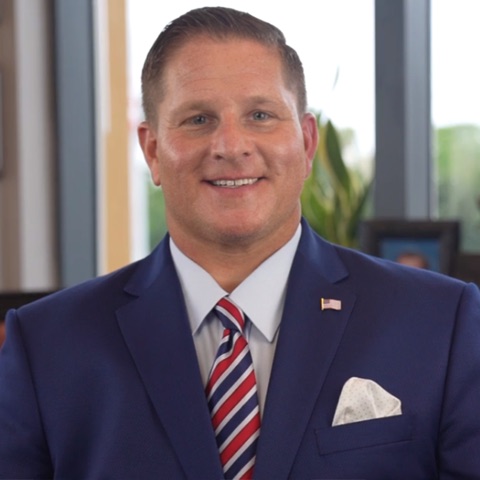
David I. Shiner, Esq.
Founder, Shiner Law Group · AV Preeminent® rated · Florida Bar member since 2002
David I. Shiner founded Shiner Law Group and has been a member of The Florida Bar since 2002. He is a graduate of Nova Southeastern University’s law school and holds an AV Preeminent® rating from Martindale-Hubbell. The firm represents injured people across Florida from offices in Boca Raton, West Palm Beach, Fort Lauderdale, Fort Pierce, Orlando, Wellington, and Belle Glade, and handles these cases on a contingency basis with free consultations and no attorney’s fee unless there is a recovery.
When the Other Driver Counts as Uninsured
Fla. Stat. § 627.727(3) sets out when a vehicle is treated as uninsured for these purposes. It is broader than “no policy at all,” and includes circumstances such as the liability insurer being insolvent, the available limits being insufficient, and certain policies that exclude non-family members.
The underinsured situation is the common one and the one riders are least prepared for. A driver carrying minimum bodily injury limits is not uninsured in ordinary speech, but where those limits do not reach the loss, underinsured motorist coverage is the mechanism that addresses the gap. Because an e-bike rider is unprotected in a collision, the injuries in these cases frequently exceed low liability limits.
How a hit-and-run is treated, and what a given policy requires by way of proof, depends on that policy’s language rather than on § 627.727 alone. It is a question to put to a lawyer with the policy in hand, and to put early — most policies impose prompt notice obligations that are independent of the two-year limitations period.
The PIP Question, Stated Honestly
A great deal of published material tells Florida e-bike riders that their own auto policy’s personal injury protection will pay their medical bills. That is stated with far more confidence than the statute supports, and riders make decisions on it.
Fla. Stat. § 627.736(4)(e) directs the insurer of the owner of a motor vehicle to pay PIP benefits for bodily injury sustained in Florida by the owner “while occupying a motor vehicle, or while not an occupant of a self-propelled vehicle if the injury is caused by physical contact with a motor vehicle.” The same qualifier governs the resident-relative route at § 627.736(4)(e)3. and the route for other persons at § 627.736(4)(e)4. It is not confined to pedestrians.
Everything therefore turns on whether an electric bicycle is a “self-propelled vehicle.” Chapter 627 does not define the phrase. An ordinary bicycle is propelled “solely by human power” under Fla. Stat. § 316.003(4), which is why a cyclist is treated as a pedestrian for this purpose. An electric bicycle has a motor — and a Class 2 motor “may be used exclusively to propel” it under § 316.003(23)(b). Pulling the other way, § 316.20655(1) provides that an electric bicycle “is a vehicle to the same extent as a bicycle.”
We have not found a Florida appellate decision resolving it, and we are not going to tell you the answer is settled when it is not. The practical guidance is this: do not assume PIP will pay, do not assume it will not, and have a lawyer read the actual policy language before you rely on either. A dedicated guide to this question is being held back until it can be published with the certainty it needs.
Hit by a Driver While Riding Your E-Bike?
Shiner Law Group offers free case reviews for Florida e-bike riders — 24/7, no fee unless you win.
Get My Free Case ReviewShiner Law Group, P.A. · Attorney Advertising