On This Page
Two Years, Under Section 95.11(5)(a)
Florida groups its limitations periods by length. Subsection (5) of Fla. Stat. § 95.11 is headed “WITHIN TWO YEARS,” and § 95.11(5)(a) is “An action founded on negligence.” That is the provision that governs an ordinary claim against a driver who struck an e-bike rider.
§ 95.11(5)(e) — “An action for wrongful death” — sits in the same two-year subsection. The Wrongful Death Act at Fla. Stat. §§ 768.16–768.26 governs who may bring that claim and what may be recovered; § 768.21 sets out the damages available to a surviving spouse, to children, to parents of a deceased minor child, and to the estate.
The period runs from when the cause of action accrues, which is a legal question and not always the date of the collision. Do not treat the crash date as the deadline without having it confirmed.
The Citation That Moved, and Why It Still Appears
This is the single most common error in AI-generated and out-of-date Florida injury content, and it is worth naming precisely.
Before 2023, the limitations period for negligence was four years and it lived at § 95.11(3)(a). Section 3 of ch. 2023-15, Laws of Florida, cut it to two years and moved it to § 95.11(5)(a). The old subsection letter did not disappear — § 95.11(3)(a) still exists, but it now reads “An action relating to the determination of paternity,” which has nothing to do with a crash.
So a page that tells you the deadline is “four years under § 95.11(3)(a)” is wrong twice over: wrong on the length, and pointing at a subsection about parentage. The consequence of relying on it is not academic. It is the loss of the claim.
As with the comparative negligence change, note where the date lives. March 24, 2023 is not written in § 95.11. It comes from the applicability clause of the session law, ch. 2023-15. Cite the session law for the date and the statute for the period.
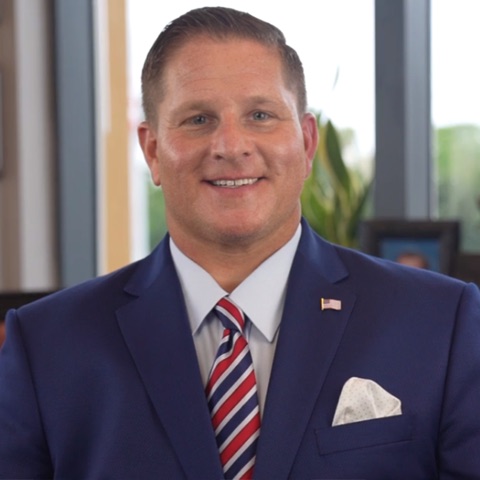
David I. Shiner, Esq.
Founder, Shiner Law Group · AV Preeminent® rated · Florida Bar member since 2002
David I. Shiner founded Shiner Law Group and has been a member of The Florida Bar since 2002. He is a graduate of Nova Southeastern University’s law school and holds an AV Preeminent® rating from Martindale-Hubbell. The firm represents injured people across Florida from offices in Boca Raton, West Palm Beach, Fort Lauderdale, Fort Pierce, Orlando, Wellington, and Belle Glade, and handles these cases on a contingency basis with free consultations and no attorney’s fee unless there is a recovery.
A Different Clock Against a Government Body
Road surface, bike lane design, signal timing, and trail maintenance claims often run against a city, a county, or a state agency. Those claims are governed by Fla. Stat. § 768.28 and they do not follow the ordinary two-year track.
| Step | What Section 768.28 Requires |
|---|---|
| Present the claim in writing — § 768.28(6)(a) | Within 3 years after the claim accrues, to the appropriate agency and, except for a claim against a municipality, county, or the Florida Space Authority, also to the Department of Financial Services. |
| Condition precedent — § 768.28(6)(b) | Notice and denial are conditions precedent to maintaining the action, but are not elements of the cause of action and do not affect the accrual date. |
| File suit — § 768.28(14) | The claim is “forever barred unless the civil action is commenced… within 4 years after such claim accrues.” |
| Recovery cap — § 768.28(5) | $200,000 per person and $300,000 per incident, absent a legislative claim bill. |
Because the presentment step is a condition precedent, a claim can be comfortably inside every deadline and still fail for want of a letter. Claims against government bodies covers the procedure in full.
Worried You Are Running Out of Time?
Shiner Law Group offers free case reviews for Florida e-bike riders — 24/7, no fee unless you win.
Get My Free Case ReviewShiner Law Group, P.A. · Attorney Advertising
Product Claims Are Not Necessarily on the Same Clock
A battery fire, a fork failure, or a brake failure is a product claim, and the limitations analysis for it is not automatically the negligence analysis. Fla. Stat. § 95.11(3)(d) sits in the four-year subsection and covers “an action for injury to a person founded on the design, manufacture, distribution…” of a product, while § 95.11(5)(a) covers actions founded on negligence.
Which of those governs a particular e-bike product claim — and how the statute of repose in Fla. Stat. § 95.031 interacts with it — depends on how the claim is pleaded and on the facts. We are not going to state a single number here, because the honest answer is that it is case-specific and getting it wrong costs the claim. If a component failed, treat the deadline as an open question to be resolved quickly with a lawyer rather than assumed.
One practical consequence: preserve the bicycle. In a product case the machine is the evidence, and a rider who has disposed of a burned battery or a snapped fork has usually disposed of the claim with it, regardless of how much time remains on any statute.