On This Page
Start From the Fact That Nothing Covers the Bicycle
A car case begins with a policy attached to the vehicle. An e-bike case begins with nothing. Fla. Stat. § 316.20655(2) provides that an electric bicycle and its operator are “not subject to the provisions of law relating to financial responsibility, driver or motor vehicle licenses, vehicle registration, title certificates…” There is no required coverage on the machine and no policy written on it.
Nor can there be personal injury protection on it. Fla. Stat. § 627.732(3) defines a PIP “motor vehicle” as a self-propelled vehicle “with four or more wheels which is of a type both designed and required to be licensed for use on the highways of this state.” A two-wheeled electric bicycle cannot qualify.
So the question is always whose other policy can be reached. In rough order of how often they matter: the at-fault driver’s bodily injury liability coverage; uninsured and underinsured motorist coverage in the rider’s household; a product claim against a manufacturer or retailer; health insurance; and — contested — personal injury protection under a household auto policy.
The Coverages Worth Checking, in Order
| Coverage | When It Applies |
|---|---|
| The at-fault driver’s bodily injury liability | The primary route where a driver is identified and adequately insured. Fault is apportioned under Fla. Stat. § 768.81. |
| Uninsured / underinsured motorist | Fla. Stat. § 627.727. Required on a Florida policy unless rejected in writing. Follows the insured person, so it is commonly available away from the car. |
| A product claim | Against a manufacturer, distributor, or retailer where a battery, brake, fork, or frame failed. Preserve the bicycle. |
| Health insurance | Often the practical source of early treatment funding while liability is contested. |
| A government body | Where the road or trail surface caused the fall. Capped and conditioned by Fla. Stat. § 768.28. |
| PIP under a household auto policy | Contested. See the analysis below before assuming either answer. |
Get the declarations page and the full policy for every auto policy in the household, not just the injured rider’s. Resident relatives matter to more than one of the routes above.
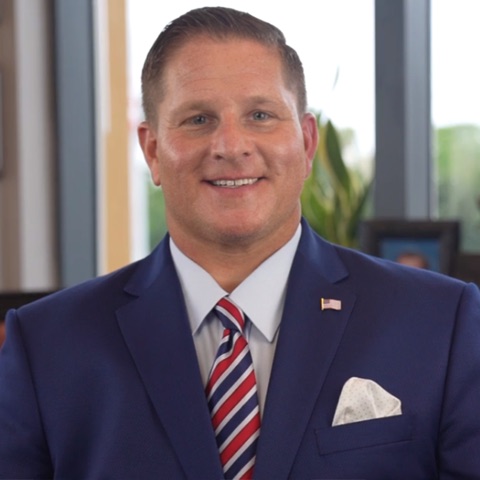
David I. Shiner, Esq.
Founder, Shiner Law Group · AV Preeminent® rated · Florida Bar member since 2002
David I. Shiner founded Shiner Law Group and has been a member of The Florida Bar since 2002. He is a graduate of Nova Southeastern University’s law school and holds an AV Preeminent® rating from Martindale-Hubbell. The firm represents injured people across Florida from offices in Boca Raton, West Palm Beach, Fort Lauderdale, Fort Pierce, Orlando, Wellington, and Belle Glade, and handles these cases on a contingency basis with free consultations and no attorney’s fee unless there is a recovery.
Uninsured and Underinsured Motorist Coverage
Fla. Stat. § 627.727(1) provides that no motor vehicle liability policy with bodily injury coverage may be issued in Florida for a vehicle registered or principally garaged here “unless uninsured motor vehicle coverage is provided therein or supplemental thereto.” The coverage is the default; it comes off only by a written rejection made by a named insured on behalf of all insureds.
The statute prescribes the form of that rejection. The heading must be in 12-point bold type and must warn: “You are electing not to purchase certain valuable coverage which protects you and your family or you are purchasing uninsured motorist limits less than your bodily liability limits when you sign this form. Please read carefully.” Where a rejection does not comply with what the statute requires, whether coverage exists is a live question rather than a closed one.
Fla. Stat. § 627.727(3) sets out when a vehicle counts as uninsured, which is broader than having no policy at all — it includes an insolvent liability insurer and insufficient available limits. The underinsured case is the common one: a driver with minimum limits is not uninsured in ordinary speech, but where those limits fall short of the loss, this is the coverage that addresses the gap. The law guide covers the mechanics.
Told There Is No Coverage for Your E-Bike Crash?
Shiner Law Group offers free case reviews for Florida e-bike riders — 24/7, no fee unless you win.
Get My Free Case ReviewShiner Law Group, P.A. · Attorney Advertising
PIP: Do Not Accept a Flat Answer Either Way
An adjuster telling a rider flatly that personal injury protection does not apply to an e-bike is stating a position, not a settled rule. So is a website telling them it does.
Fla. Stat. § 627.736(4)(e) pays benefits to a person injured “while not an occupant of a self-propelled vehicle,” and that qualifier governs the owner at (4)(e)1., the resident relative at (4)(e)3., and other persons at (4)(e)4. alike. Chapter 627 does not define “self-propelled vehicle.” The Florida Supreme Court held in Velez v. Criterion Insurance Co., 461 So. 2d 1348 (Fla. 1984), that a moped was not one, reasoning from how the Legislature classified it rather than from the presence of a motor.
Whether that carries across to a statutory electric bicycle — and whether a Class 2 throttle machine is different from Class 1 and Class 3 pedal-assist machines — has not been decided by a Florida appellate court so far as we have found. The full analysis is here, including why a rider excluded from PIP may also be relieved of the permanent injury threshold in Fla. Stat. § 627.737(2).
The practical instruction is short: do not assume, do not accept a one-line denial, and have a lawyer read the actual policy language against the statute.
When an Insurer Will Not Deal Fairly
Fla. Stat. § 624.155(1)(b) identifies acts constituting bad faith, beginning with “not attempting in good faith to settle claims when, under all the circumstances, it could and should have done so.” It also reaches failure to disclose coverage with claim payments and improper settlement tactics used to influence other parts of a policy.
There is a mandatory step first. Fla. Stat. § 624.155(3)(a) provides that “as a condition precedent to bringing an action under this section, the department and the authorized insurer must have been given 60 days’ written notice of the violation.” That is the civil remedy notice, and the 60-day period gives the insurer the opportunity to cure.
None of this is a shortcut, and none of it changes what a claim is worth. It is a mechanism with strict prerequisites, and getting the notice wrong can foreclose the remedy. Raise it with a lawyer rather than filing one on your own account.