On This Page
Understand What the Call Is For
An adjuster is a professional evaluating a file for the company that will pay it. That is not a criticism — it is the job description. But it means the early call is an evidence-gathering exercise, and the questions are shaped by the defenses the file will later run.
There is a distinction worth holding onto. You owe your own insurer the cooperation and prompt notice your policy requires, and those obligations run independently of any statutory deadline. You owe the other side's insurer nothing beyond basic identifying information, and in particular you are not obliged to give them a recorded statement.
Two things riders concede without realising. The first is fault, in passing — a remark about speed, lane position, or lighting. Because Fla. Stat. § 768.81(6) bars recovery entirely above 50 percent fault, a defense does not need to win outright; it needs to move the apportionment past halfway. The second is the coverage position, by accepting a characterization of it as settled when it is not.
Arguments the Statutes Already Answer
Several standard adjuster positions are not arguments about the evidence at all. They are arguments the Florida Statutes have already resolved.
| What You May Hear | What the Statute Says |
|---|---|
| “You weren't wearing a helmet.” | Fla. Stat. § 316.2065(18): helmet non-use “may not be considered evidence of negligence or contributory negligence.” Compare § 316.614(10), which does allow seat belt non-use as comparative negligence evidence — and which excludes electric bicycles at § 316.614(3)(a). |
| “The report says you were at fault.” | Fla. Stat. § 316.066(4): such a report or a statement made for it “may not be used as evidence in any trial, civil or criminal.” |
| “No citation was issued, so there's no claim.” | A citation is a traffic matter decided on a different standard by a different decision-maker. Civil liability is decided on the evidence. |
| “You have no uninsured motorist coverage.” | Fla. Stat. § 627.727(1) requires it unless a named insured rejected it in writing on a form whose heading is in 12-point bold type. Ask for the declarations page and any signed rejection before accepting this. |
| “PIP doesn't apply to e-bikes.” | Unsettled, not settled. Fla. Stat. § 627.736(4)(e) turns on “self-propelled vehicle,” which chapter 627 does not define. |
| “You were on the sidewalk, so it's your fault.” | Fla. Stat. § 316.1995(1) expressly excepts s. 316.20655 from the sidewalk prohibition, and § 316.2065(9) gives a rider on a sidewalk or in a crosswalk a pedestrian's rights. |
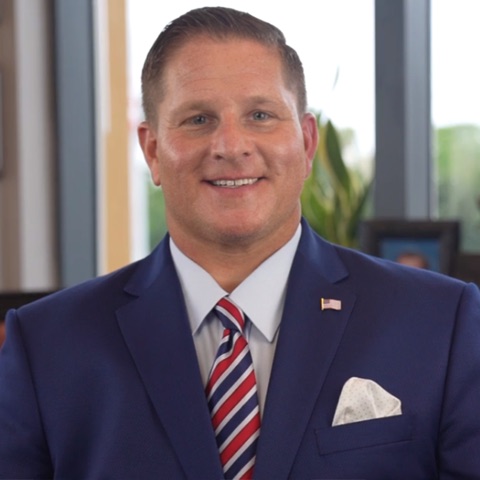
David I. Shiner, Esq.
Founder, Shiner Law Group · AV Preeminent® rated · Florida Bar member since 2002
David I. Shiner founded Shiner Law Group and has been a member of The Florida Bar since 2002. He is a graduate of Nova Southeastern University’s law school and holds an AV Preeminent® rating from Martindale-Hubbell. The firm represents injured people across Florida from offices in Boca Raton, West Palm Beach, Fort Lauderdale, Fort Pierce, Orlando, Wellington, and Belle Glade, and handles these cases on a contingency basis with free consultations and no attorney’s fee unless there is a recovery.
How to Handle the Contact
- Give your own insurer prompt notice. Policy notice obligations are contractual, often short, and independent of the statutory deadlines.
- Confirm who you are speaking to. Company, claim number, and whether they act for you or for the other party. Write it down.
- Decline a recorded statement to the other side's insurer until you have taken advice. You can be polite and still decline.
- Give facts, not conclusions. Where you were and what happened — not how fast you think you were going, who you think was at fault, or how badly you think you are hurt.
- Never say you are “fine” or “not really injured.” Many injuries present days later, and the remark is quoted back.
- Do not sign a blanket medical authorization. A broad release opens your entire history rather than the treatment relevant to this crash.
- Do not accept an early settlement before the injuries have declared themselves. A release is final.
- Ask for coverage positions in writing, particularly any denial of PIP or uninsured motorist coverage. A written position is checkable against the statute.
An Adjuster Is Already Calling You?
Shiner Law Group offers free case reviews for Florida e-bike riders — 24/7, no fee unless you win.
Get My Free Case ReviewShiner Law Group, P.A. · Attorney Advertising
When an Insurer Will Not Deal Fairly
Florida provides a statutory remedy, and it is worth understanding its shape rather than its reputation. Fla. Stat. § 624.155(1)(b) identifies acts constituting bad faith, beginning with “not attempting in good faith to settle claims when, under all the circumstances, it could and should have done so.” It also reaches failure to disclose coverage with claim payments and improper settlement tactics used to influence other portions of a policy.
There is a mandatory step first. Fla. Stat. § 624.155(3)(a) provides that “as a condition precedent to bringing an action under this section, the department and the authorized insurer must have been given 60 days’ written notice of the violation.” That is the civil remedy notice, and the 60-day period exists to give the insurer an opportunity to cure.
Getting the notice wrong can foreclose the remedy, and it is not a document to draft on your own account. Raise it with a lawyer. Nothing about it changes what a claim is worth — this site does not tell anyone that, and neither should an adjuster.