On This Page
Who Brings the Claim, and For Whom
Florida channels a death claim through one action rather than several. Fla. Stat. § 768.20 provides that the action “shall be brought by the decedent’s personal representative, who shall recover for the benefit of the decedent’s survivors and estate all damages, as specified in this act, caused by the injury resulting in death.”
The same section carries three further rules worth knowing. A personal injury action does not survive the death — “when a personal injury to the decedent results in death, no action for the personal injury shall survive, and any such action pending at the time of death shall abate.” If the wrongdoer has died, their personal representative is the defendant. And a defense “that would bar or reduce a survivor’s recovery if she or he were the plaintiff may be asserted against the survivor, but shall not affect the recovery of any other survivor.”
Fla. Stat. § 768.18(1) defines the survivors: “the decedent’s spouse, children, parents, and, when partly or wholly dependent on the decedent for support or services, any blood relatives and adoptive brothers and sisters.”
One definition surprises almost everyone. § 768.18(2) provides that for this Act, “minor children” means children under 25 years of age, notwithstanding the age of majority. A 22-year-old is a minor child for these purposes.
What the Act Allows to Be Recovered
Fla. Stat. § 768.21 sets out the damages, allocated between particular survivors and the estate.
| Who | What |
|---|---|
| Surviving spouse — § 768.21(2) | “Loss of the decedent’s companionship and protection and… mental pain and suffering from the date of injury.” |
| Children — § 768.21(3) | Minor children, and all children where there is no surviving spouse, may recover for “lost parental companionship, instruction, and guidance and for mental pain and suffering from the date of injury.” |
| Parents — § 768.21(4) | “Each parent of a deceased minor child may also recover for mental pain and suffering from the date of injury.” |
| The estate — § 768.21(6) | Lost earnings, prospective net accumulations, and medical and funeral expenses. |
The definitions in § 768.18 do real work here. § 768.18(3) provides that “support” includes contributions in kind as well as money, and § 768.18(4) defines “services” as “tasks, usually of a household nature, regularly performed by the decedent that will be a necessary expense to the survivors.” What someone did for a household, not only what they earned, is part of the loss.
On the limitation people most often hear about: § 768.21(8) provides that the damages in subsection (3) are not recoverable by adult children, and those in (4) not by parents of an adult child, with respect to claims for medical negligence as defined by § 766.106(1). A crash claim is not a medical negligence claim. That carve-out does not apply to it, and it is frequently described as though it applies generally.
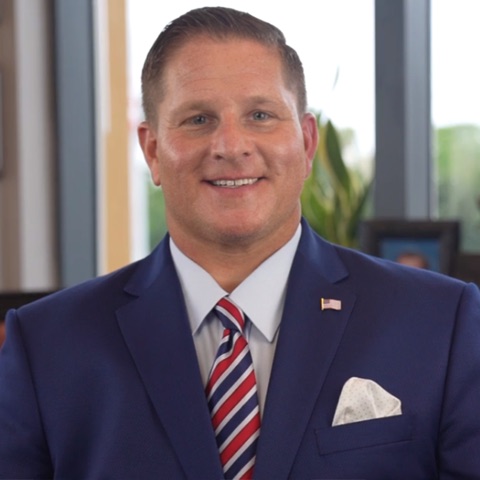
David I. Shiner, Esq.
Founder, Shiner Law Group · AV Preeminent® rated · Florida Bar member since 2002
David I. Shiner founded Shiner Law Group and has been a member of The Florida Bar since 2002. He is a graduate of Nova Southeastern University’s law school and holds an AV Preeminent® rating from Martindale-Hubbell. The firm represents injured people across Florida from offices in Boca Raton, West Palm Beach, Fort Lauderdale, Fort Pierce, Orlando, Wellington, and Belle Glade, and handles these cases on a contingency basis with free consultations and no attorney’s fee unless there is a recovery.
The Deadlines, and Why They Move Faster Than Grief
This is the part nobody wants to think about in the weeks after a death, and it is the part that cannot wait.
- Two years for the wrongful death action under Fla. Stat. § 95.11(5)(e).
- Three years to present a written claim to a government body under Fla. Stat. § 768.28(6)(a), which is a condition precedent under § 768.28(6)(b) — and where a road defect or a bike lane design was involved, that is a live possibility.
- Four years to commence suit against a government body under Fla. Stat. § 768.28(14), with recovery capped at $200,000 per person and $300,000 per incident by § 768.28(5).
- Policy notice periods, which are contractual and often far shorter.
- Appointment of a personal representative, which has to happen before the action can be brought at all under § 768.20, and which takes time.
Evidence runs on its own clock and does not pause either. The bicycle, the scene, video, and witnesses all degrade within days — see evidence that proves the case. If a component failed, the machine is the claim; do not let it be repaired or scrapped.
Lost a Family Member in an E-Bike Crash?
Shiner Law Group offers free case reviews for Florida families — 24/7, no fee unless you win.
Get My Free Case ReviewShiner Law Group, P.A. · Attorney Advertising
Who May Be Responsible
The same range as any other e-bike claim, and identifying all of it matters more here because the losses are larger than most available coverage.
- The at-fault driver, and their employer or the vehicle’s owner.
- A manufacturer, distributor, or retailer, where a battery, brake, fork, or frame failed — see product liability.
- A road authority, subject to the caps and presentment requirements in Fla. Stat. § 768.28.
- Uninsured and underinsured motorist coverage under Fla. Stat. § 627.727, which must be on a Florida policy unless a named insured rejected it in writing on a compliant form. In a death claim the driver’s limits are very frequently exceeded.
Where the driver left the scene, Fla. Stat. § 316.027(2)(c) makes leaving a crash resulting in death a felony of the first degree carrying a mandatory minimum term of imprisonment of 4 years — see hit-and-run crashes. A criminal case and a civil claim are separate and neither depends on the other.
No coverage attaches to the bicycle itself: Fla. Stat. § 316.20655(2) exempts electric bicycles from financial responsibility requirements. Fault is apportioned under Fla. Stat. § 768.81, and note the rule in § 768.20 that a defense against one survivor does not affect the recovery of another.