On This Page
How Head Injuries Happen on an E-Bike
An e-bike rider has no structure around them and no restraint. In a collision the body stops when it meets the vehicle or the roadway, and the brain continues moving inside the skull until it does not. The damage comes from that deceleration and from rotation, which is why a rider can sustain a significant brain injury without any visible head wound and without ever losing consciousness.
Several features of e-bike crashes concentrate this risk. Closing speeds are higher than on a conventional bicycle, particularly in left-cross collisions where both vehicles are moving toward each other. A dooring or a fork failure pitches the rider forward head-first with no time to brace. And a secondary impact with the roadway frequently follows the first impact, so there are two events rather than one.
The practical problem is that the injury does not announce itself. A rider walks away, declines transport, and gets worse over the following days — by which time the absence of an early medical record has become the insurer's argument.
The Helmet Argument, and Why It Fails
Every head injury claim by a bare-headed rider meets the same response. It is worth knowing exactly how the statute answers it, because the answer is unusually clean.
Fla. Stat. § 316.2065(18) provides: “The failure of a person to wear a bicycle helmet or the failure of a parent or guardian to prevent a child from riding a bicycle without a bicycle helmet may not be considered evidence of negligence or contributory negligence.”
The subsection is unqualified. It does not carve out adults, it does not carve out head injuries, and it does not carve out riders who were required to wear one and did not. It reaches e-bike riders through § 316.20655(1), which imports § 316.2065 in full.
That matters directly under Fla. Stat. § 768.81(6), which bars recovery entirely where a claimant is more than 50 percent at fault. Removing helmet use from the apportionment removes the single argument most often deployed against a head-injured rider.
Two footnotes. There is no statewide helmet requirement for adults at all — § 316.2065(3)(d) applies to riders and passengers under 16, and requires a helmet meeting 16 C.F.R. part 1203. And the seat belt analogy an adjuster may reach for does not work: § 316.614(10) does allow belt non-use as comparative negligence evidence, but § 316.614(3)(a) excludes electric bicycles from that section entirely.
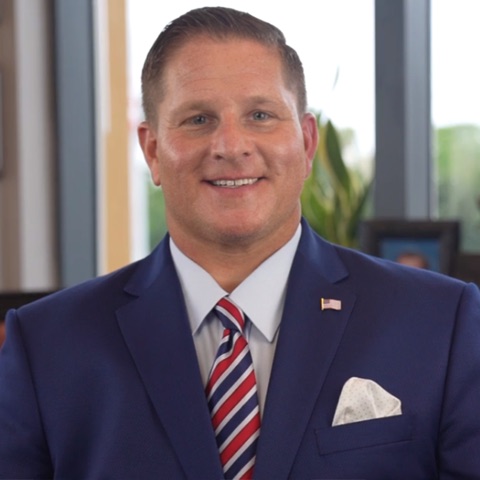
David I. Shiner, Esq.
Founder, Shiner Law Group · AV Preeminent® rated · Florida Bar member since 2002
David I. Shiner founded Shiner Law Group and has been a member of The Florida Bar since 2002. He is a graduate of Nova Southeastern University’s law school and holds an AV Preeminent® rating from Martindale-Hubbell. The firm represents injured people across Florida from offices in Boca Raton, West Palm Beach, Fort Lauderdale, Fort Pierce, Orlando, Wellington, and Belle Glade, and handles these cases on a contingency basis with free consultations and no attorney’s fee unless there is a recovery.
What Actually Documents a Brain Injury
This is where these claims are won or lost, and it is largely within the injured person’s control in the first weeks.
A normal CT or MRI does not exclude a brain injury. Imaging is looking for bleeding and structural damage. A great deal of what follows a head impact is functional — attention, processing speed, word-finding, memory, sleep, mood, tolerance for light and noise — and it does not appear on a scan. Insurers rely heavily on “imaging was normal.”
- Be examined immediately, and say it was a head impact, even if you did not lose consciousness. Loss of consciousness is not required for a brain injury.
- Report every symptom as it occurs, to a clinician, so it enters the record with a date. Symptoms recalled months later carry far less weight than symptoms recorded contemporaneously.
- Keep a daily log — headaches, fatigue, confusion, irritability, what you could not do that you could do before.
- Ask people around you what they have noticed. Family and colleagues often see changes the injured person cannot, and their accounts matter.
- Document the work consequences — hours lost, tasks that became difficult, responsibilities handed over.
- Follow through on referrals. Gaps in treatment are read as recovery, whether or not that is what they mean.
- Preserve the helmet if you wore one, and the bicycle either way.
Injury type matters to Florida’s permanent injury threshold. Fla. Stat. § 627.737(2) limits recovery for pain, suffering, mental anguish and inconvenience to injuries consisting in whole or in part of “(a) significant and permanent loss of an important bodily function”, “(b) permanent injury within a reasonable degree of medical probability, other than scarring or disfigurement”, “(c) significant and permanent scarring or disfigurement”, or “(d) death”. Whether that threshold reaches an e-bike rider at all is bound up with the unresolved PIP question, and is a matter for a lawyer on your facts rather than an assumption.
Head Injury After an E-Bike Crash?
Shiner Law Group offers free case reviews for Florida e-bike riders — 24/7, no fee unless you win.
Get My Free Case ReviewShiner Law Group, P.A. · Attorney Advertising
What a Brain Injury Changes About the Claim
Three things, and they interact badly with the ordinary rhythm of a claim.
| What Changes | Why It Matters |
|---|---|
| The picture takes a long time to settle | Cognitive and behavioral consequences emerge over months. Resolving a claim before that picture is clear means releasing something nobody has measured. |
| The losses are not only medical | Fla. Stat. § 768.81(1) defines economic damages to include past and future lost income and loss of earning capacity. With a brain injury the earning capacity question is frequently larger than the treatment cost. |
| The deadline does not wait | Fla. Stat. § 95.11(5)(a) allows two years for negligence causes of action accruing on or after March 24, 2023. The claim has to be protected while the medical picture is still developing. |
| Nobody can see it | There is no cast and no scar. Which is precisely why the contemporaneous record and the accounts of people who knew you before carry so much weight. |
On who pays: no insurance attaches to the bicycle under Fla. Stat. § 316.20655(2), and whether PIP reaches an e-bike rider is unresolved in Florida. In serious head injury cases the at-fault driver’s liability limits are frequently exceeded, which makes uninsured and underinsured motorist coverage under § 627.727 unusually important. Ask for the declarations page for every auto policy in the household.