What the Driver Was Required to Do
Florida does not treat leaving as a minor failing. Fla. Stat. § 316.027 requires a driver involved in a crash on public or private property that results in injury to “immediately stop the vehicle at the scene of the crash, or as close thereto as possible,” and to “remain at the scene of the crash until he or she has fulfilled the requirements of s. 316.062” — the section covering the giving of information and rendering of aid.
The offense level rises with the harm, and the figures are fixed in the subsections:
| Outcome of the Crash | Offense Under the Statute |
|---|---|
| Injury other than serious bodily injury — § 316.027(2)(a) | A felony of the third degree. |
| Serious bodily injury — § 316.027(2)(b) | A felony of the second degree. |
| Death — § 316.027(2)(c) | A felony of the first degree, carrying a mandatory minimum term of imprisonment of 4 years. |
Two points riders find surprising. The duty applies on private property as well as public — a parking lot or apartment complex driveway is covered. And it applies to the driver of “a vehicle involved in a crash,” which does not require contact with the rider in every case; a driver who causes a crash and leaves is within the section's concern.
What to Do When the Driver Leaves
- Get medical care first. Nothing below matters as much, and a gap between the crash and the first medical record is the argument an insurer will make.
- Write down everything you remember about the vehicle immediately — color, body style, any part of the plate, damage, direction of travel, occupants. Recollection degrades within hours, and a partial plate is often enough.
- Report it to law enforcement and get the crash report number. Under Fla. Stat. § 316.066(2)(a) the report is confidential for 60 days, but § 316.066(2)(b) gives you access as a party.
- Canvass for cameras the same day. Doorbell cameras, business cameras, transit cameras, and dashcams are how these drivers are actually identified — and most systems overwrite within days. This is the single most time-sensitive step.
- Photograph the scene and any vehicle debris. A broken mirror housing, a trim fragment, or paint transfer on your bicycle can identify a make and model.
- Preserve the bicycle unrepaired. Paint transfer and impact damage are physical evidence tying a vehicle to the crash.
- Notify your own insurer promptly. Uninsured motorist claims carry notice obligations under the policy that run independently of any statutory deadline.
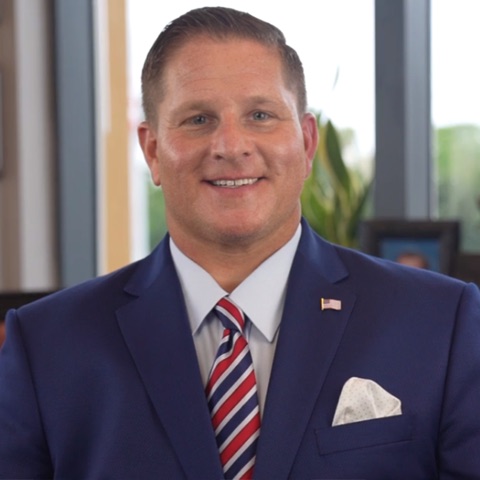
David I. Shiner, Esq.
Founder, Shiner Law Group · AV Preeminent® rated · Florida Bar member since 2002
David I. Shiner founded Shiner Law Group and has been a member of The Florida Bar since 2002. He is a graduate of Nova Southeastern University’s law school and holds an AV Preeminent® rating from Martindale-Hubbell. The firm represents injured people across Florida from offices in Boca Raton, West Palm Beach, Fort Lauderdale, Fort Pierce, Orlando, Wellington, and Belle Glade, and handles these cases on a contingency basis with free consultations and no attorney’s fee unless there is a recovery.
How You Can Still Recover When Nobody Is Found
This is the situation uninsured motorist coverage exists for, and it is why UM matters more to e-bike riders than to almost anyone else. No insurance attaches to the bicycle — Fla. Stat. § 316.20655(2) exempts electric bicycles from financial responsibility requirements — so when the at-fault driver vanishes, the rider's own household coverage is frequently the only route left.
Fla. Stat. § 627.727(1) provides that no motor vehicle liability policy providing bodily injury coverage may be issued in Florida for a vehicle registered or principally garaged here “unless uninsured motor vehicle coverage is provided therein or supplemental thereto.” It comes off the policy only by a written rejection by a named insured, on a form whose heading appears in 12-point bold type carrying the warning language the statute prescribes.
So the first question is not “do I have UM” but “is there a valid rejection on file.” Ask the insurer for the declarations page and for any signed rejection form, and get both read before accepting that there is no coverage. § 627.727(3) then defines when a vehicle counts as uninsured, which is broader than having no policy at all.
What a specific policy requires to prove an unidentified vehicle was involved is a matter of that policy's language rather than of § 627.727 alone. That is a question to put to a lawyer with the policy in hand, and to put early. The UM guide covers the mechanics.
Hit and Left at the Scene?
Shiner Law Group offers free case reviews for Florida e-bike riders — 24/7, no fee unless you win.
Get My Free Case ReviewShiner Law Group, P.A. · Attorney Advertising
If the Driver Is Identified Later
Identification changes the shape of the claim rather than replacing it. The driver's bodily injury liability coverage becomes the primary route, and underinsured motorist coverage may sit behind it where the limits fall short of the loss — which is common, because an unprotected rider's injuries frequently exceed minimum limits.
Leaving the scene also tends to matter evidentially. A driver who fled has, by definition, not given the account they would otherwise have given at the roadside, and the conduct is the subject of a felony provision in § 316.027(2). Whether that supports a claim for punitive damages is a separate question governed by Fla. Stat. § 768.72(1), which permits no punitive claim without “a reasonable showing by evidence in the record or proffered by the claimant,” with financial-worth discovery barred until the claim is allowed. That is a decision for a lawyer on the facts, not an assumption to make.
Deadlines run from accrual regardless of when a driver is found: two years for negligence under Fla. Stat. § 95.11(5)(a), and two years for wrongful death under § 95.11(5)(e). Waiting on an investigation does not extend them.