The Subsection, in Full
Fla. Stat. § 316.2065(18) provides:
“The failure of a person to wear a bicycle helmet or the failure of a parent or guardian to prevent a child from riding a bicycle without a bicycle helmet may not be considered evidence of negligence or contributory negligence.”
It is one sentence and it is unqualified. It does not carve out adults. It does not carve out head injuries. It does not carve out riders who were required to wear a helmet and did not. And it reaches electric bicycle riders through Fla. Stat. § 316.20655(1), which imports § 316.2065 in full.
Worth noticing: the subsection names a parent’s position expressly. A parent whose child was injured while unhelmeted does not face an argument that their own failure to insist on a helmet reduces the child’s recovery.
The Rule Everyone Assumes Applies Instead
The intuition that helmet non-use must count against a rider comes from seat belts, where Florida law says something quite different.
Fla. Stat. § 316.614(10) provides that a seat belt violation “shall not constitute negligence per se, nor shall such violation be used as prima facie evidence of negligence or be considered in mitigation of damages, but such violation may be considered as evidence of comparative negligence, in any civil action.”
| Provision | Effect |
|---|---|
| Bicycle or e-bike helmet — § 316.2065(18) | Non-use “may not be considered evidence of negligence or contributory negligence.” Excluded outright. |
| Motor vehicle seat belt — § 316.614(10) | Non-use “may be considered as evidence of comparative negligence.” Admissible on apportionment. |
Two provisions, two directions. And the seat belt statute does not reach e-bike riders in any event: § 316.614(3)(a) excludes “a motorcycle, a moped, a bicycle, or an electric bicycle” from that section entirely. So there is no route by which a seat-belt-style argument attaches to a helmetless e-bike rider — one statute excludes the argument and the other excludes the rider.
Why This Matters More Than It Sounds
Because of the arithmetic in Fla. Stat. § 768.81.
Subsection (2) reduces an award in proportion to a claimant’s own share of fault. Subsection (6) bars recovery entirely where a party is “found to be greater than 50 percent at fault for his or her own harm.” A defense does not need to prove a rider caused the crash. It needs to move the apportionment past halfway.
Helmet use is the argument most often reached for against a head-injured rider, and it is intuitively persuasive to almost everyone. Section 316.2065(18) removes it from the calculation before it starts. That is a substantial thing, and riders generally have no idea it exists.
It changes nothing about whether to wear one. The subsection governs what a court may consider; it has no bearing on what happens to a head that strikes a kerb. Those are different questions and both deserve honest answers. See helmets for the practical side and the helmet law guide for the legal one.
When an Adjuster Raises It Anyway
They will. A subsection restricting what a court may consider does not stop anyone raising a point in a negotiation, and helmet use is raised in these files routinely — sometimes as an explicit discount, more often as a general suggestion that the rider brought it on themselves.
What the statute gives you is a specific answer rather than an argument. “Section 316.2065(18) provides that helmet non-use may not be considered evidence of negligence or contributory negligence” is a sentence with a subsection attached to it, and it is checkable in thirty seconds. That tends to end the line of discussion faster than a general objection would.
- Ask for coverage and liability positions in writing. A written position can be checked against the statute; a remark on a call cannot.
- Do not concede the point in conversation. Agreeing that you “probably should have worn one” is not a legal admission, but it shapes a negotiation.
- Know which arguments are actually live. Lighting under § 316.2065(7) and lane position under § 316.2065(5)(a) are real questions. Helmet use is not one.
- Remember the seat belt point. If the analogy is raised, § 316.614(3)(a) excludes electric bicycles from that section entirely.
See dealing with adjusters for the wider set of arguments the statutes already answer, and evidence that proves the case for what is worth preserving instead.
Frequently Asked Questions
Does Florida require adults to wear a helmet on an e-bike?
So can an insurer bring my helmet up at all?
Does this apply if my child was hurt?
What does it cost to hire an e-bike accident lawyer in Florida?
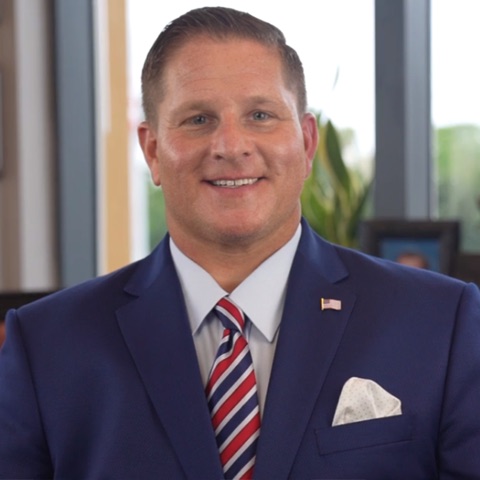
David I. Shiner, Esq.
Founder, Shiner Law Group · AV Preeminent® rated · Florida Bar member since 2002
David I. Shiner founded Shiner Law Group and has been a member of The Florida Bar since 2002. He is a graduate of Nova Southeastern University’s law school and holds an AV Preeminent® rating from Martindale-Hubbell. The firm represents injured people across Florida from offices in Boca Raton, West Palm Beach, Fort Lauderdale, Fort Pierce, Orlando, Wellington, and Belle Glade, and handles these cases on a contingency basis with free consultations and no attorney’s fee unless there is a recovery.
Being Blamed for Your Own E-Bike Crash?
Shiner Law Group offers free case reviews for Florida e-bike riders — 24/7, no fee unless you win.
Get My Free Case ReviewShiner Law Group, P.A. · Attorney Advertising