On This Page
What Changed in 2023
Before 2023, the limitations period for a negligence action in Florida was four years, and it sat at Fla. Stat. § 95.11(3)(a). Section 3 of ch. 2023-15, Laws of Florida, cut it to two years and moved it to § 95.11(5)(a), the subsection headed “WITHIN TWO YEARS.”
So there are two changes in one, and a source can get either or both wrong.
The part that makes this unusually dangerous is what happened to the old subsection. § 95.11(3)(a) did not disappear. It still exists, and it now reads: “An action relating to the determination of paternity, with the time running from the date the child reaches the age of majority.”
A page telling a reader the deadline is “four years under § 95.11(3)(a)” is therefore wrong twice over: wrong on the length, and pointing at a provision about parentage. Someone relying on it will believe they have two more years than they do.
Where the March 24, 2023 Date Actually Lives
The two-year period applies to causes of action accruing on or after March 24, 2023. That date is repeated everywhere, including on this site — but it is worth knowing where it comes from, because it is a good test of whether a source has read the law or copied someone who read it.
The date is not in § 95.11. It is not in § 768.81 either. There is no sentence in either statute that mentions it. It comes from the applicability clause of the session law, ch. 2023-15.
So the correct citation practice is: cite the statute for the period, and the session law for the date. A source that attributes the date to § 95.11 is citing a provision that does not contain it — which usually means the citation was not checked.
The Other Clocks That Run at the Same Time
Two years is the headline, but it is not the only period, and for some claims it is not even the operative one.
| Deadline | What It Requires |
|---|---|
| Wrongful death — § 95.11(5)(e) | 2 years. |
| Government body, present the claim — § 768.28(6)(a) | 3 years to present in writing to the agency and, except for a municipality, county, or the Florida Space Authority, to the Department of Financial Services. A condition precedent under § 768.28(6)(b). |
| Government body, file suit — § 768.28(14) | 4 years to commence the action. |
| Bad faith — § 624.155(3)(a) | 60 days' written notice to the Department and the insurer, as a condition precedent. |
| Policy notice | Contractual. Frequently far shorter than any of the above, and independent of all of them. |
The government track catches people out, because a pavement defect or a bike lane design claim can look like an ordinary negligence claim right up until the presentment requirement is missed. See claims against government bodies.
And the Part No Website Can Answer
Every period above runs from accrual — when the cause of action arises. Accrual is a legal question determined by Florida law, and it is not automatically the date of the crash.
That is why this site publishes a deadline reference rather than a deadline calculator. The reference lists every period with its subsection, and its arithmetic helper shows what each period would run to from a date you supply — it never tells you your deadline, because it cannot know your accrual date.
Fla. Stat. § 768.28(6)(b) makes the same point from a different angle in the government context: the notice and denial requirements “shall not be deemed to be elements of the cause of action and shall not affect the date on which the cause of action accrues.” Waiting on an agency does not extend anything.
If you are anywhere near a deadline, the useful step is not more reading. It is a conversation with a lawyer who can establish the accrual date on your facts.
Frequently Asked Questions
How do I know which deadline applies to me?
Does the clock start on the day of the crash?
What if I am already close to two years?
What does it cost to hire an e-bike accident lawyer in Florida?
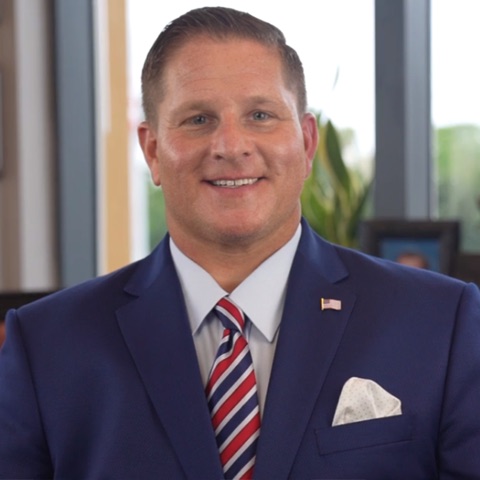
David I. Shiner, Esq.
Founder, Shiner Law Group · AV Preeminent® rated · Florida Bar member since 2002
David I. Shiner founded Shiner Law Group and has been a member of The Florida Bar since 2002. He is a graduate of Nova Southeastern University’s law school and holds an AV Preeminent® rating from Martindale-Hubbell. The firm represents injured people across Florida from offices in Boca Raton, West Palm Beach, Fort Lauderdale, Fort Pierce, Orlando, Wellington, and Belle Glade, and handles these cases on a contingency basis with free consultations and no attorney’s fee unless there is a recovery.
Worried You Are Running Out of Time?
Shiner Law Group offers free case reviews for Florida e-bike riders — 24/7, no fee unless you win.
Get My Free Case ReviewShiner Law Group, P.A. · Attorney Advertising