Why Delivery Riders Are Differently Exposed
A rider working for a delivery platform accumulates risk in a way a commuter does not. More hours in traffic, more of them after dark, more junction movements per shift, and an economic incentive to keep moving. The legal duties are identical — Fla. Stat. § 316.20655(1) gives every e-bike operator a bicycle rider's rights and duties — but the exposure is not.
Two rules deserve particular attention for working riders. Fla. Stat. § 316.2065(7) requires, between sunset and sunrise, a white front lamp visible at 500 feet and a rear lamp and reflector each visible at 600 feet — the rear requires both, and a great many delivery bikes carry only a lamp. And § 316.2065(5)(a) requires riding in the bicycle lane or as close as practicable to the right-hand curb when slower than traffic.
Those matter because of the arithmetic in Fla. Stat. § 768.81(6): a rider found more than 50 percent at fault recovers nothing. Lighting is one of the few arguments against a rider that is concrete rather than impressionistic, and it is entirely within a working rider's control before the crash.
The Coverage Question, Stated Honestly
This is where working riders are worst served by general advice, so it is worth separating what is settled from what is not.
Settled: no insurance attaches to the machine. Fla. Stat. § 316.20655(2) exempts an electric bicycle and its operator from the laws relating to financial responsibility, licensing, registration, and title. And no PIP can be written on it, because Fla. Stat. § 627.732(3) defines a PIP “motor vehicle” as having four or more wheels.
Unsettled: whether an injured e-bike rider reaches PIP through a household auto policy at all. § 627.736(4)(e) pays benefits to a person injured “while not an occupant of a self-propelled vehicle,” and chapter 627 never defines that phrase. See PIP and e-bike riders.
Fact-specific: everything about the working relationship. Whether you are an employee or an independent contractor is a question of fact, answered under Florida's Workers' Compensation Law in chapter 440 for compensation purposes and under ordinary principles of vicarious liability for a claim against a platform or restaurant. A designation in an app agreement is evidence of the relationship; it is not the whole of it. This site is not going to tell you how that question comes out, because it depends on your facts.
Frequently overlooked: uninsured motorist coverage. § 627.727(1) requires it on a Florida policy unless a named insured rejected it in writing on a form whose heading appears in 12-point bold type. A rider who owns no car may still be a resident relative under a household policy. Ask for the declarations page.
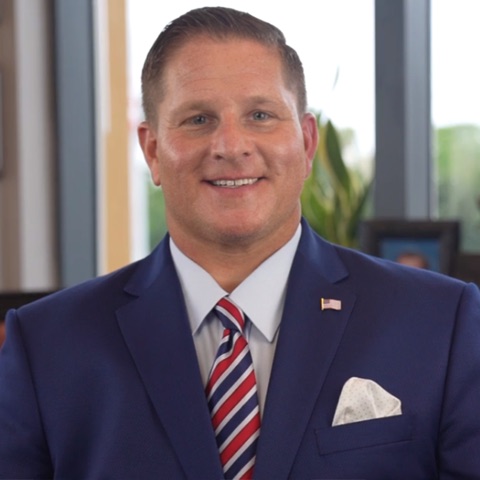
David I. Shiner, Esq.
Founder, Shiner Law Group · AV Preeminent® rated · Florida Bar member since 2002
David I. Shiner founded Shiner Law Group and has been a member of The Florida Bar since 2002. He is a graduate of Nova Southeastern University’s law school and holds an AV Preeminent® rating from Martindale-Hubbell. The firm represents injured people across Florida from offices in Boca Raton, West Palm Beach, Fort Lauderdale, Fort Pierce, Orlando, Wellington, and Belle Glade, and handles these cases on a contingency basis with free consultations and no attorney’s fee unless there is a recovery.
What a Working Rider Should Preserve Immediately
Delivery riders have one category of evidence nobody else has, and it disappears into a platform's systems rather than sitting in a drawer.
- Screenshot the app immediately — the active delivery, the time, the route, the order, and your status as on-shift. Do this at the scene if you are able, or as soon as you can afterwards. App history is not always accessible later and is not yours to control.
- Save the working agreement you accepted, in whatever form you have it, and the pay records for the period.
- Report the crash to the platform in writing and keep the confirmation.
- Get the crash report number. Confidential for 60 days under Fla. Stat. § 316.066(2)(a) but available to you as a party under § 316.066(2)(b).
- Photograph the bicycle, the classification label required by § 316.20655(3), and any cargo box or rack fitted for the work.
- Photograph your lighting, and keep the lamps. If the crash was after dark, § 316.2065(7) compliance will be raised.
- Get medical care immediately, and do not let the pressure of lost shifts delay it. A gap between crash and first record is the argument every insurer makes.
Hurt While Delivering on an E-Bike?
Shiner Law Group offers free case reviews for Florida e-bike riders — 24/7, no fee unless you win.
Get My Free Case ReviewShiner Law Group, P.A. · Attorney Advertising
Who May End Up Responsible
| Party | Basis or Route |
|---|---|
| The at-fault driver | Ordinary negligence, with the duties in Fla. Stat. § 316.083(2) and (3), § 316.122, and § 316.151(1)(a)2. applying as they would to any rider. |
| That driver's employer | Where the driver was working — which in urban delivery areas is common, and worth establishing rather than assuming. |
| The platform or restaurant | Fact-specific. Depends on the relationship, the degree of control, and the circumstances of the crash. |
| A manufacturer or retailer | Where a component failed. Delivery machines accumulate mileage quickly and are frequently under-maintained. See mechanical failures. |
| A road authority | Where a surface defect caused the fall — subject to the caps and the 3-year presentment deadline in Fla. Stat. § 768.28(5) and (6)(a). |
| Your own household UM coverage | Under Fla. Stat. § 627.727, particularly where the driver was uninsured, underinsured, or never identified. |
One further point for younger riders. Since ch. 2025-149, Laws of Florida, Fla. Stat. § 316.20655(8) permits a local government to adopt minimum age requirements to operate an electric bicycle and to require government-issued photo identification. Delivery work often attracts riders at the younger end, and the controlling rule is the municipal code where the work is done.