On This Page
Vehicles and Classifications
Electric bicycle
A bicycle or tricycle with fully operable pedals, a seat or saddle for the rider, and an electric motor of less than 750 watts meeting one of three classifications (Fla. Stat. § 316.003(23)). All elements are required.
Class 1 electric bicycle
A motor providing assistance only while the rider is pedaling, ceasing at 20 mph (§ 316.003(23)(a)).
Class 2 electric bicycle
A motor that “may be used exclusively to propel” the bicycle — a throttle — ceasing to assist at 20 mph (§ 316.003(23)(b)).
Class 3 electric bicycle
A motor providing assistance only while the rider is pedaling, ceasing at 28 mph (§ 316.003(23)(c)).
Bicycle
A vehicle “propelled solely by human power,” with two tandem wheels (§ 316.003(4)). The word “solely” matters to the PIP question.
Motor vehicle (traffic code)
A self-propelled vehicle not operated on rails, expressly excluding bicycles, electric bicycles, motorized scooters, mopeds and others (§ 316.003(46)).
Motor vehicle (PIP)
A different definition entirely: a self-propelled vehicle “with four or more wheels” designed and required to be licensed for highway use (§ 627.732(3)). An e-bike can never satisfy it.
Moped
A vehicle with pedals, a seat, no more than three wheels, a motor of not more than 2 brake horsepower and incapable of exceeding 30 mph on level ground (§ 316.003(44)).
Motorized scooter
A motor-powered vehicle or micromobility device, with or without a seat, no more than three wheels, incapable of exceeding 20 mph on level ground (§ 316.003(48)).
Low-speed electric bicycle (federal)
A two- or three-wheeled vehicle with operable pedals and a motor under 750 watts whose top speed on motor power alone, with a 170-pound rider, is under 20 mph (15 U.S.C. § 2085(b)). A different test from Florida's.
Insurance Terms
PIP (personal injury protection)
Florida no-fault benefits under Fla. Stat. § 627.736 — $10,000 in medical and disability benefits and $5,000 in death benefits, at 80% of reasonable medical expenses and 60% of lost gross income.
Self-propelled vehicle
Undefined in chapter 627, and the hinge of the whole e-bike coverage question. § 627.736(4)(e) pays benefits only to a person injured “while not an occupant of a self-propelled vehicle.”
Uninsured motorist (UM) coverage
Coverage that must be included on a Florida liability policy unless a named insured rejects it in writing on a form whose heading is in 12-point bold type (§ 627.727(1)).
Underinsured motorist (UIM)
The same coverage operating where the at-fault driver's limits are insufficient. § 627.727(3) describes when a vehicle counts as uninsured.
Permanent injury threshold
The limit in § 627.737(2) on recovering for pain and suffering: (a) significant and permanent loss of an important bodily function; (b) permanent injury other than scarring; (c) significant and permanent scarring or disfigurement; (d) death.
Civil remedy notice
The 60 days' written notice to the Department and the insurer required by § 624.155(3)(a) as a condition precedent to a statutory bad faith action.
Declarations page
The summary page of an insurance policy showing coverages and limits. Not a statutory term — but the first document to obtain after a crash.
Claims, Fault and Damages
Comparative negligence
Fault apportionment. Fla. Stat. § 768.81(2) reduces an award in proportion to the claimant's own share; § 768.81(6) bars recovery entirely by a party more than 50 percent at fault for their own harm.
Negligence action
Defined broadly at § 768.81(1) to include claims based on negligence, strict liability, products liability, professional malpractice and breach of warranty.
Products liability action
Also defined at § 768.81(1): a civil action based on strict liability, negligence, breach of warranty or nuisance theories for a defective product.
Economic damages
Defined at § 768.81(1) to include past and future lost income and loss of earning capacity, medical and funeral expenses, lost support, and replacement value of property.
Noneconomic damages
Pain, suffering, mental anguish and inconvenience — the categories § 627.737(2) restricts where the threshold applies.
Punitive damages
Damages to punish rather than compensate. § 768.72(1) permits no claim without “a reasonable showing by evidence,” and § 768.73(1) caps any award.
Dangerous instrumentality doctrine
A Florida common-law rule, not a statute, under which a vehicle's owner may be responsible for the negligence of a person they entrusted it to.
Accrual
When a cause of action arises, and when a limitations period starts. It is a legal question and is not automatically the date of the crash.
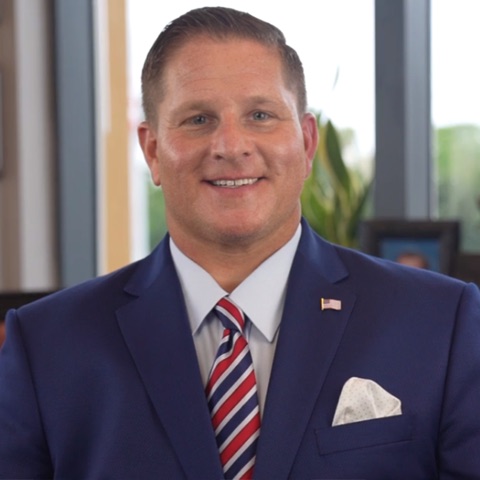
David I. Shiner, Esq.
Founder, Shiner Law Group · AV Preeminent® rated · Florida Bar member since 2002
David I. Shiner founded Shiner Law Group and has been a member of The Florida Bar since 2002. He is a graduate of Nova Southeastern University’s law school and holds an AV Preeminent® rating from Martindale-Hubbell. The firm represents injured people across Florida from offices in Boca Raton, West Palm Beach, Fort Lauderdale, Fort Pierce, Orlando, Wellington, and Belle Glade, and handles these cases on a contingency basis with free consultations and no attorney’s fee unless there is a recovery.
Deadlines and Procedure
Statute of limitations
The period within which suit must be filed. Negligence: 2 years for causes of action accruing on or after March 24, 2023 (§ 95.11(5)(a)). Wrongful death: 2 years (§ 95.11(5)(e)).
Sovereign immunity
The rule that a government body cannot be sued except as the Legislature permits. § 768.28 is that permission, with caps of $200,000 per person and $300,000 per incident at § 768.28(5).
Presentment
The written claim that must be given to a government agency, and to the Department of Financial Services except for municipalities and counties, within 3 years (§ 768.28(6)(a)).
Condition precedent
Something that must happen before an action may be maintained. Presentment and denial are conditions precedent under § 768.28(6)(b) — but do not affect the accrual date.
Personal representative
The person who brings a wrongful death action, for the benefit of the survivors and the estate (§ 768.20).
Survivors
The decedent's spouse, children, parents, and dependent blood relatives and adoptive siblings (§ 768.18(1)). Note § 768.18(2): “minor children” means under 25.
Contingency fee
A fee payable out of a recovery. Governed in Florida by Rule 4-1.5 of the Rules Regulating The Florida Bar, which requires a written agreement. The terms that bind you are in the agreement you sign.
Need Any of This Applied to Your Situation?
Shiner Law Group offers free case reviews for Florida e-bike riders — 24/7, no fee unless you win.
Get My Free Case ReviewShiner Law Group, P.A. · Attorney Advertising
Crash and Injury Terms
Dooring
A crash caused by a vehicle door opened into a rider's path. Fla. Stat. § 316.2005 permits opening a door only when “reasonably safe to do so.” Not itself a statutory term.
Right hook
A driver overtaking a rider and then turning right across them. § 316.151(1)(a)2. permits the turn only if the bicycle is at least 20 feet from the intersection and the turn can safely be made.
Left cross
An oncoming driver turning left across a rider's path. § 316.122 requires them to yield to any vehicle approaching from the opposite direction.
Thermal runaway
A self-sustaining reaction inside a lithium-ion cell in which heat drives reactions producing more heat. A technical term, not a statutory one.
Degloving
An injury in which skin and underlying tissue are torn away from the structures beneath by shear force. A clinical term, not a statutory one.
Out-of-class
Not a statutory term. Practitioners' shorthand for a machine that fails one or more elements of § 316.003(23) and so is not an electric bicycle in Florida.