On This Page
What Ch. 2025-149 Actually Did
Amid a great deal of noise about the e-bike bill that was vetoed in 2026, a real change that did become law has gone comparatively unnoticed.
Ch. 2025-149, Laws of Florida amended Fla. Stat. § 316.20655, adding two subsections:
| Subsection | What It Provides |
|---|---|
| § 316.20655(8) | “A local government may adopt an ordinance providing one or more minimum age requirements to operate an electric bicycle and may adopt an ordinance requiring an operator of an electric bicycle to possess a government-issued photographic identification while operating the electric bicycle.” |
| § 316.20655(9) | “A local government may provide training on the safe operation of electric bicycles and compliance with the traffic laws of this state that apply to electric bicycles.” |
Before this, local authority over e-bikes was largely about where they could go. Subsection (8) is about who may ride one, and it is a different kind of power.
What This Means in Practice
Three consequences, and the third is the one that catches people.
There is still no statewide minimum age. Florida did not set one. Anyone telling you the minimum age to ride an e-bike in Florida is a particular number is either describing a local ordinance or making it up.
The controlling text moved. For age and identification, the rule that binds you is now the municipal code where you are riding — not § 316.20655, which merely authorises it. That is a meaningful shift in where a rider has to look.
The rule can change at a city line. Section 316.20655(1) already preserved local authority over operation on streets and sidewalks, and over bicycle paths, multiuse paths, trail networks, and beaches and dunes as defined in § 161.54(3) and (4). Add age and identification to that, and a coastal ride through several jurisdictions can cross several different regimes in a few miles. See where e-bikes may be ridden.
What Parents Should Take From This
The practical audience for subsection (8) is families, and there are two things worth knowing.
Check the local code, not the statute. If your teenager rides, the age rule that applies is the one where they ride — and it may differ from the next town over. The same goes for any photo identification requirement.
The one statewide age rule is about helmets, and it is unchanged. Fla. Stat. § 316.2065(3)(d) requires a rider or passenger under 16 to wear a helmet that is properly fitted, fastened by a strap, and meets 16 C.F.R. part 1203. That applies to passengers as well as riders.
And a reassurance that is worth repeating because the fear is so common: § 316.2065(18) provides that failure to wear a helmet “or the failure of a parent or guardian to prevent a child from riding a bicycle without a bicycle helmet” may not be considered evidence of negligence or contributory negligence. A local age ordinance does not change that — an ordinance can regulate conduct, but the evidentiary rule is fixed by state statute. See children and teen riders.
If There Is a Crash
A local ordinance violation is a fact in the case rather than the end of it.
It may bear on apportionment under Fla. Stat. § 768.81(2), and § 768.81(6) bars recovery entirely where a party is more than 50 percent at fault for their own harm. But it does not relieve a driver of the duties they owe: due care under § 316.130(15), the 3-foot passing requirement in § 316.083(2) and (3) which names electric bicycles expressly, or the 20-foot right-turn condition in § 316.151(1)(a)2.
One practical step: pull the ordinance as it stood on the date of the crash. Codes change, and the version in force then is the one that matters. Photograph the classification label required by § 316.20655(3) as well — where an ordinance distinguishes by class, what the machine was becomes the question.
Frequently Asked Questions
Is there a statewide minimum age for e-bikes in Florida?
Can a city really require photo ID to ride a bicycle?
What happens if I break a local ordinance and then get hit by a car?
What does it cost to hire an e-bike accident lawyer in Florida?
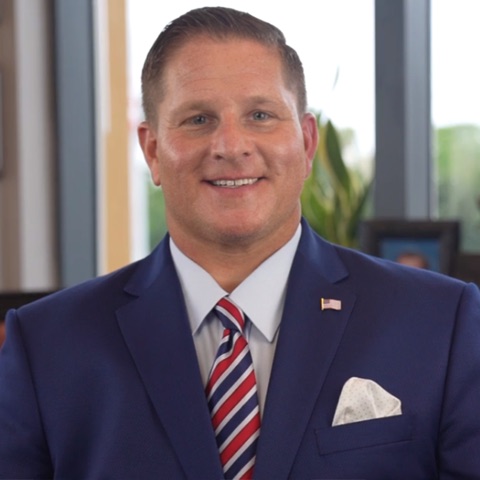
David I. Shiner, Esq.
Founder, Shiner Law Group · AV Preeminent® rated · Florida Bar member since 2002
David I. Shiner founded Shiner Law Group and has been a member of The Florida Bar since 2002. He is a graduate of Nova Southeastern University’s law school and holds an AV Preeminent® rating from Martindale-Hubbell. The firm represents injured people across Florida from offices in Boca Raton, West Palm Beach, Fort Lauderdale, Fort Pierce, Orlando, Wellington, and Belle Glade, and handles these cases on a contingency basis with free consultations and no attorney’s fee unless there is a recovery.
Was Your Child Injured on an E-Bike?
Shiner Law Group offers free case reviews for Florida e-bike riders — 24/7, no fee unless you win.
Get My Free Case ReviewShiner Law Group, P.A. · Attorney Advertising