What Was Actually Published
On June 24, 2026 the Consumer Product Safety Commission published a notice of proposed rulemaking that would create 16 C.F.R. parts 1112 and 1265 and establish a mandatory safety standard for lithium-ion batteries used in micromobility products and for the electrical systems of those products.
The docket number is CPSC-2025-0012, and comments were due August 24, 2026.
The distinction that matters: this is a proposal. The Commission issued it to solicit public comment before deciding whether to issue a final rule. The document states no effective date, because there is nothing yet to be effective. Reporting that describes UL certification as newly required is describing a document that has not become law.
What the Proposal Covers
It would incorporate three standards by reference, with added requirements on top of them.
| Standard | What It Covers |
|---|---|
| ANSI/CAN/UL 2849:2020 | Electrical systems for eBikes — the battery, battery management system, drive unit, charger and wiring as an integrated assembly. |
| ANSI/CAN/UL 2272:2024 | Electrical systems for personal e-mobility devices. |
| ANSI/CAN/UL/ULC 2271:2023 | Batteries for use in light electric vehicle applications. |
The scope reaches six categories of micromobility product — eBikes, eScooters, self-balancing scooters, eSkateboards, eUnicycles, and hybrids — and, notably, also covers user-replaceable battery packs sold separately and aftermarket chargers. Those are two of the recognized risk paths, and they sit outside the original manufacturer’s control entirely.
The Commission’s stated concern is thermal runaway — the self-sustaining reaction inside a lithium-ion cell that can propagate through a pack, resists smothering, can reignite after appearing to be out, and produces a large volume of toxic gas quickly.
What Actually Applies Today
Two things, and they are worth separating from the proposal.
Florida law incorporates the federal bicycle requirements. Fla. Stat. § 316.20655(5) requires an electric bicycle to “comply with the equipment and manufacturing requirements for bicycles adopted by the United States Consumer Product Safety Commission under 16 C.F.R. part 1512,” and 16 C.F.R. § 1512.2(a)(2) expressly includes low-speed electric bicycles in that part’s definition of “bicycle.” Part 1512 is real, in force, and specific — § 1512.5(b)(1) sets a handbrake stopping distance no greater than 4.57 m (15 ft) from the test speed, and § 1512.16 sets reflector requirements. But it governs bicycle equipment, not battery chemistry.
Florida adds a cut-out requirement. § 316.20655(6) requires an electric bicycle to operate so that the motor “is disengaged or ceases to function when the rider stops pedaling or when the brakes are applied.”
What does not apply today is any federal mandate that a battery or electrical system be certified to UL 2849, 2271 or 2272. That is what the proposal would change.
What This Means for a Claim Now
A battery fire is a product liability claim rather than a road negligence claim, and Fla. Stat. § 768.81(1) defines a “products liability action” to cover claims based on strict liability, negligence, breach of warranty, or nuisance theories for a defective product.
The status of the standards matters to how they are used, not to whether they matter. A voluntary standard that a product does not meet is evidence about the product. It is not a statutory violation, and anyone framing it as one is overstating the position — which tends to be found out.
The practical instruction is unchanged by any of this, and it is the one thing on this page that is genuinely urgent: do not let anyone dispose of the battery, the bicycle, or the charger. Fire departments and insurers clear fire debris as a matter of routine. However destroyed the pack looks, it carries the evidence of which cell and which mechanism failed, and the claim usually goes into the skip with it. See battery fires and thermal runaway.
Frequently Asked Questions
Is UL 2849 certification required by law?
Does that mean certification is meaningless?
What does Florida require of e-bike equipment?
What does it cost to hire an e-bike accident lawyer in Florida?
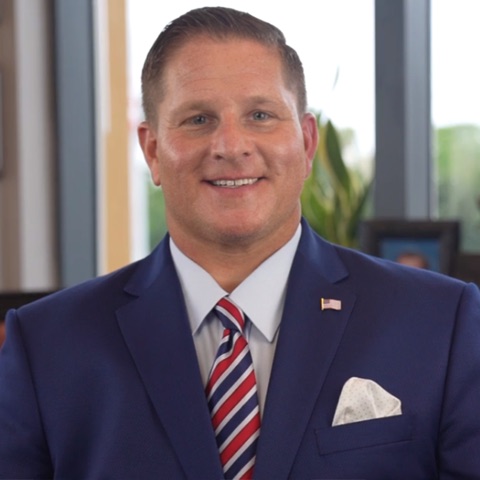
David I. Shiner, Esq.
Founder, Shiner Law Group · AV Preeminent® rated · Florida Bar member since 2002
David I. Shiner founded Shiner Law Group and has been a member of The Florida Bar since 2002. He is a graduate of Nova Southeastern University’s law school and holds an AV Preeminent® rating from Martindale-Hubbell. The firm represents injured people across Florida from offices in Boca Raton, West Palm Beach, Fort Lauderdale, Fort Pierce, Orlando, Wellington, and Belle Glade, and handles these cases on a contingency basis with free consultations and no attorney’s fee unless there is a recovery.
Injured by an E-Bike Battery Fire?
Shiner Law Group offers free case reviews for Florida e-bike riders — 24/7, no fee unless you win.
Get My Free Case ReviewShiner Law Group, P.A. · Attorney Advertising