What the I-Team Was Asking
On July 13, 2026, CBS12 News published an I-Team investigation into South Florida’s e-bike boom, reported by Katie Bente, under the headline Inside South Florida’s e-bike boom: Crashes, confusion and consequences. It covered three things at once: a run of serious crashes involving young riders across Palm Beach and Martin counties, the Martin County Sheriff’s Office moving from educating riders to citing them, and the question the I-Team said it most wanted answered — who can be held responsible when a child on an e-bike is badly hurt.
David Shiner, founder and managing attorney of Shiner Law Group, was interviewed for the segment. What follows is not a retelling of the reporting. It is the Florida law behind the two points he made on air, cited to the subsection, because both of them are routinely stated incorrectly elsewhere.
- Watch the segment: David Shiner speaks about e-bike safety, CBS12 News
- Read the report: CBS12 News I-Team, July 13, 2026
“You Think, Oh, It’s a Toy”
Asked about the injuries these crashes produce, Shiner told CBS12:
“You get a 14-year-old riding an e-bike and think, ‘Oh, it’s a toy,’ but at 25 miles an hour, you hit your head on the concrete, you get hurt. You get hurt real bad.”
Florida law has no category for a toy. It has three classes, and each is defined by the speed at which the motor stops helping — the figures below are the statutory ones, from the subsections that fix them.
| Class and Subsection | What the Statute Fixes |
|---|---|
| Class 1 — § 316.003(23)(a) | Assists only while the rider pedals; assistance ceases at 20 mph. |
| Class 2 — § 316.003(23)(b) | Motor “may be used exclusively to propel” the bicycle; ceases at 20 mph. |
| Class 3 — § 316.003(23)(c) | Assists only while the rider pedals; assistance ceases at 28 mph. |
The 25 mph in that quotation sits between the two ceilings, which is the point worth holding onto: a machine that is entirely legal for a child to ride in Florida can be assisting to 28 miles an hour. There is no statewide minimum age to ride one. The only statewide age rule in this area is the helmet requirement for riders under 16 in Fla. Stat. § 316.2065(3)(d).
How a Parent Can Carry Some of the Fault
The I-Team’s central question was put to him directly. Bente asked who could possibly be held responsible in these sort of instances. Shiner’s answer:
“Obviously, we would always think the car would be responsible, right? … But believe it or not, the parent itself can actually have some responsibility for that crash.”
Note the word itself. That is not a throwaway. It marks the difference between the parent being answerable for the child’s conduct and the parent being answerable for the parent’s own — and in Florida, on an e-bike, only the second one is available.
The duty is statutory. Fla. Stat. § 316.2065(8) provides:
“No parent of any minor child and no guardian of any minor ward may authorize or knowingly permit any such minor child or ward to violate any of the provisions of this section.”
Section 316.2065 is written about bicycles, and reaches electric bicycles through Fla. Stat. § 316.20655(1), which gives an electric bicycle and its operator all the rights and duties of a bicycle and its operator, naming § 316.2065 expressly. So the parental duty in subsection (8) travels with it.
What that produces is not automatic liability. It produces a percentage. Fla. Stat. § 768.81(3) requires the court to “enter judgment against each party liable on the basis of such party’s percentage of fault and not on the basis of the doctrine of joint and several liability,” and Fla. Stat. § 768.81(6) bars recovery entirely for a party found more than 50 percent at fault for their own harm. Who was at fault, and by how much, is a question about the facts of the particular crash.
Two Routes People Assume Are Open, and Are Not
Most published writing on this subject reaches for one of two arguments. Neither works on an e-bike in Florida, and knowing why is more useful than knowing that.
The driver-license statute does not reach an e-bike. Fla. Stat. § 322.09(2) imputes a minor’s negligence to the adult who signed the minor’s license application and makes them jointly and severally liable — but only for negligence “when driving a motor vehicle upon a highway.” Fla. Stat. § 316.20655(2) provides that an electric bicycle and its operator are “not subject to the provisions of law relating to financial responsibility, driver or motor vehicle licenses, vehicle registration, title certificates” and more. No license is required, so no application is signed, so § 322.09(2) never attaches.
The helmet argument is excluded by statute. Fla. Stat. § 316.2065(18) is unusually explicit about parents:
“The failure of a person to wear a bicycle helmet or the failure of a parent or guardian to prevent a child from riding a bicycle without a bicycle helmet may not be considered evidence of negligence or contributory negligence.”
The subsection names the parent’s failure specifically. An insurer that wants to put a percentage on a parent cannot get there by pointing at a bare head.
| Provision | Effect on a Parent’s Exposure |
|---|---|
| § 322.09(2) — imputed negligence | Applies only to a minor “driving a motor vehicle upon a highway.” Closed off for e-bikes by § 316.20655(2). |
| § 316.2065(18) — helmet non-use | A parent’s failure to prevent helmetless riding “may not be considered evidence of negligence.” Excluded outright. |
| § 316.2065(8) — permitting a violation | A parent may not authorize or knowingly permit a minor to violate § 316.2065. This is the route that remains open. |
Who Else Can End Up on the Verdict Form
Shiner’s point on air was that the driver is not the only candidate — not that the driver is off the hook. Section 768.81(3) apportions among everyone whose fault contributed, which means the question after a crash is never a single name.
- The driver. Fla. Stat. § 316.083(2) and (3) set the 3-foot passing clearance and name electric bicycles expressly; § 316.130(15) imposes a duty of due care toward any person on a bicycle.
- A property owner. Where a crash happens at a driveway or exit, sight lines become a question of fact — what could be seen, from where, and who was responsible for the condition that blocked it.
- Whoever sold or built the machine. If the bicycle did not do what § 316.20655(6) requires — disengage when the rider stops pedaling or brakes — or if it did not carry the § 316.20655(3) classification label, that is a question about the product, not the rider.
This is also why the Martin County enforcement drive the I-Team covered matters beyond the citation itself. Where a local ordinance is in force, what it required on the date of the crash can shape the apportionment. Florida’s statewide answer was supposed to arrive in 2026 and did not: CS/SB 382 passed both chambers unanimously and was vetoed, which we covered separately.
Frequently Asked Questions
Is a parent automatically liable when their child crashes an e-bike in Florida?
Which statute can actually put a parent at fault?
Can an insurer argue a parent was negligent for letting a child ride without a helmet?
Is there a minimum age to ride an e-bike in Florida?
What does it cost to hire an e-bike accident lawyer in Florida?
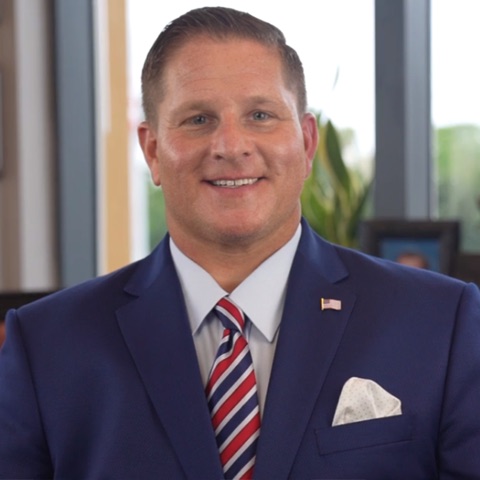
David I. Shiner, Esq.
Founder, Shiner Law Group · AV Preeminent® rated · Florida Bar member since 2002
David I. Shiner founded Shiner Law Group and has been a member of The Florida Bar since 2002. He is a graduate of Nova Southeastern University’s law school and holds an AV Preeminent® rating from Martindale-Hubbell. The firm represents injured people across Florida from offices in Boca Raton, West Palm Beach, Fort Lauderdale, Fort Pierce, Orlando, Wellington, and Belle Glade, and handles these cases on a contingency basis with free consultations and no attorney’s fee unless there is a recovery.
Was a Child Hurt on an E-Bike in Florida?
Shiner Law Group offers free case reviews for Florida e-bike riders — 24/7, no fee unless you win.
Get My Free Case ReviewShiner Law Group, P.A. · Attorney Advertising